
 Official media reference
Direct answer
Build around the five official classes—Assault, Specialist, Sniper, Machine Gunner and Grenadier—then budget for wages, injuries and unavailable soldiers.
How to use this page
Warhounds combines unique Veterans with a larger pool of recruits. Recruitment quality is therefore not only raw combat power: salary, recovery coverage and role redundancy matter.
What is verified
- Avoid a roster with only one medical or utility option.
- Keep enough active soldiers to cover recovery downtime.
- Match close, long-range, suppression and demolition roles.
- Do not trust unofficial class names that conflict with the official five.
Evidence scope
Verified against sources on August 14, 2026Official sources confirm five classes, ten authored Veterans and recruitable regular soldiers. Exact wages, candidate refresh rules and every recruitment prerequisite are not yet published in a reliable launch-build table, so this guide focuses on roster decisions that can be checked in-game.
The five official roles
The official class list is Assault, Specialist, Sniper, Machine Gunner and Grenadier. Use those names when comparing candidates; unofficial lists that substitute Recon, Heavy, Leader or Support may be describing another build or generated material. Think in battlefield functions—close pressure, utility, range, sustained fire and demolition—rather than assuming the title alone defines every skill.
- Assault covers close pressure.
- Specialist supplies utility and support.
- Sniper handles distance and height.
- Machine Gunner provides sustained fire or control.
- Grenadier answers hard cover and grouped targets.
Veterans versus regular recruits
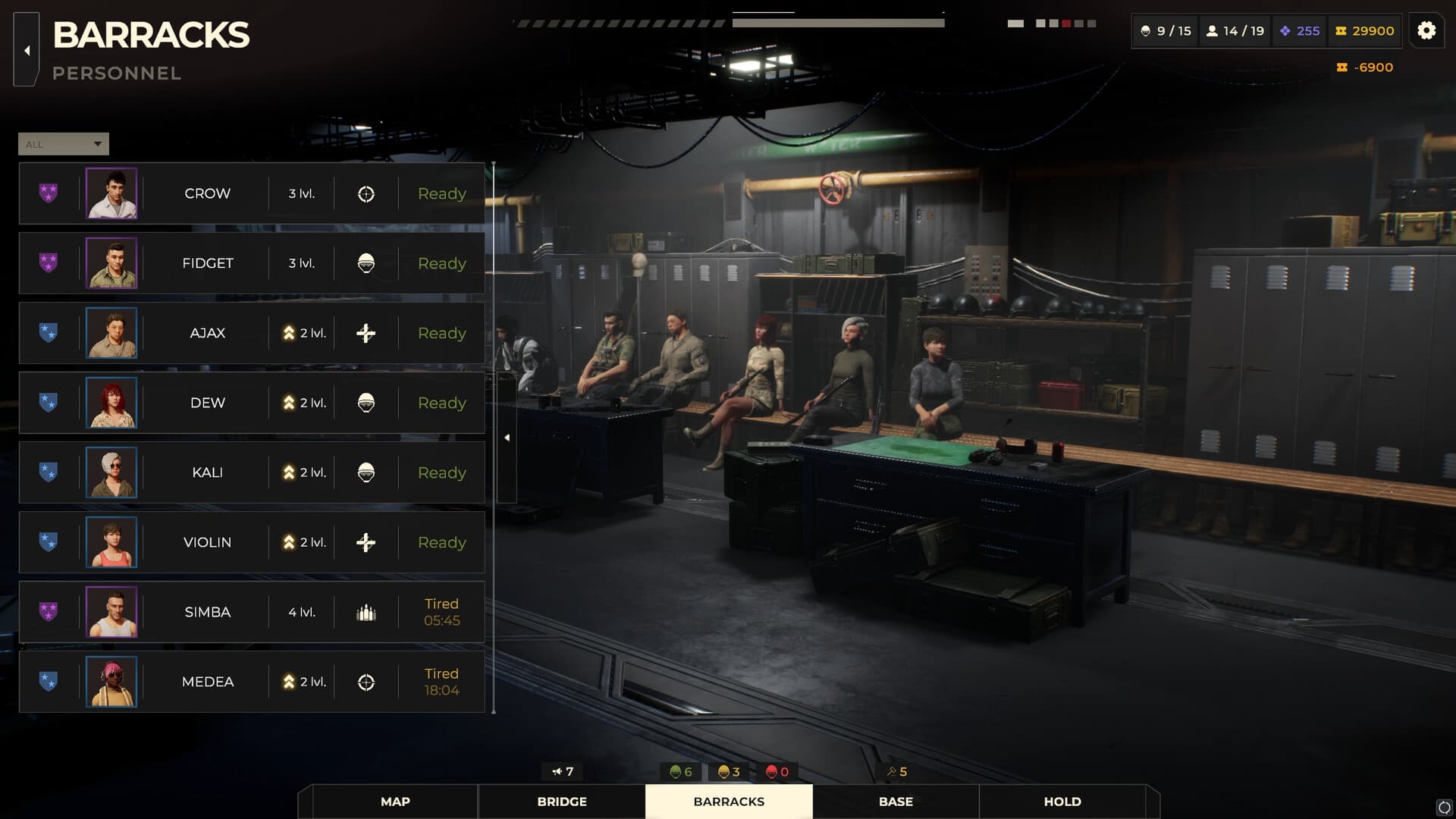
Warhounds includes ten authored Veterans with their own appearance, background, personality, abilities and dialogue, plus a wider pool of regular recruits. Veterans provide authored identity and potentially distinctive abilities; recruits provide flexibility and cosmetic customization. Do not assume a Veteran is automatically the cheaper or strategically safer hire—compare availability, role, wage and recovery impact on the current company.
- Use authored Veterans for unique coverage, not just collection progress.
- Use recruits to fill missing roles and recovery gaps.
- Record the exact candidate card before relying on community tables.
Hire for availability, not only power
The roster must survive wages, injuries and mission overlap. A powerful team with only one utility specialist or one long-range option can collapse when that soldier is wounded. Build at least one layer of redundancy for critical functions, then stop recruiting when additional salary threatens equipment, healing or facility upgrades.
- Identify the role that currently has no substitute.
- Check the candidate's wage and availability before combat stats.
- Keep enough healthy soldiers for the next deployment.
- Do not recruit past the company's economic buffer merely to fill the roster.
Candidate evaluation
- Confirm the candidate uses one of the five official classes.
- Compare role coverage and range with the active roster.
- Check wage, health, availability and immediate equipment cost.
- Prefer a needed substitute over a duplicate luxury role.
- Keep cash for salaries, healing and mission equipment.
Frequently asked questions
How many classes are there?
Five are confirmed officially: Assault, Specialist, Sniper, Machine Gunner and Grenadier.
How many unique Veterans are there?
Official material states there are ten authored Veterans. The separate Action Heroes Pack advertises alternate outfits for nine of them, which does not change the ten-character roster count.
Should I fill every roster slot immediately?
Not if wages and equipment would remove your emergency reserve. Add enough redundancy to cover injuries, then expand as contracts and facilities support the cost.
Sources and verification
Official facts are separated from developer estimates and unverified community claims.